Search is changing. People are no longer relying only on traditional Google results to find information, products, services, and businesses. They are increasingly using AI-powered search experiences to ask detailed questions and receive direct answers. Google has introduced AI Overviews and AI Mode, while platforms such as ChatGPT can search the web and provide answers with links to relevant sources. This shift has created a new opportunity for businesses: Generative Engine Optimization (GEO). But what exactly is GEO, and how can it help your business become more visible online?
What is GEO?
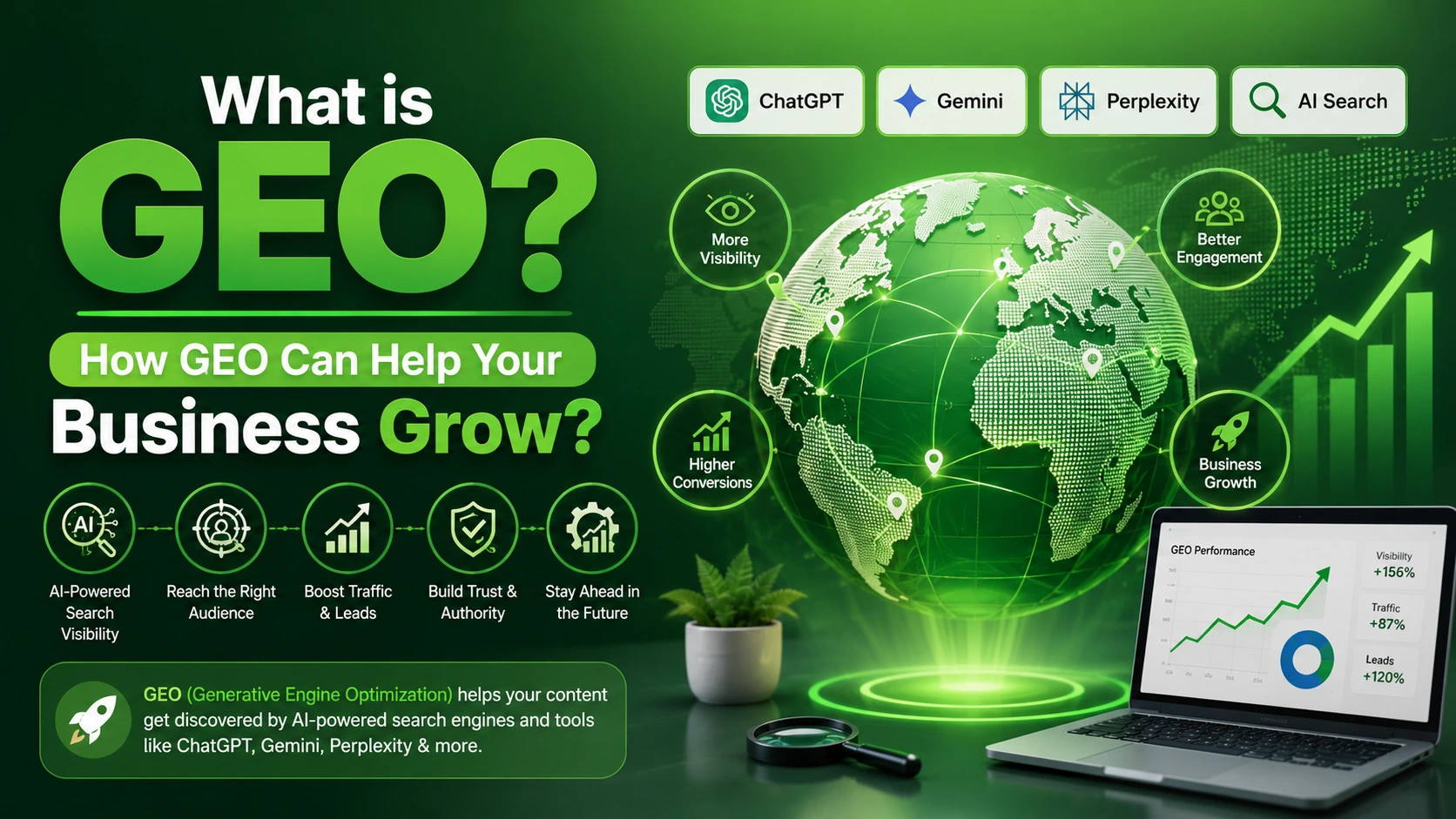
GEO stands for Generative Engine Optimization. GEO is the process of improving a website’s content, structure, authority, and entity signals so that AI-powered search systems can better understand, interpret, and potentially reference a business or its content when generating answers. Traditional SEO primarily focuses on improving visibility in search engine results pages. GEO considers how your business and content may be discovered and represented within generative search experiences.
These experiences can include:
- Google AI Overviews and AI Mode
- ChatGPT Search
- Microsoft Copilot
- Perplexity
- Other AI-powered search and answer systems
However, GEO should not be treated as a replacement for traditional SEO. Google itself states that established SEO fundamentals remain important for its generative AI search experiences. Instead, GEO builds on a strong SEO foundation.
How Is GEO Different From Traditional SEO?
Traditional SEO focuses heavily on helping search engines discover, understand, and rank webpages. GEO adds another layer: making information easier for generative systems to understand and use when producing answers. For example, traditional SEO may focus on:
- Keyword targeting
- Search intent
- Technical SEO
- Internal linking
- Content optimization
- Backlinks
- Website performance
GEO can additionally focus on:
- Clear entity information
- Strong topical relationships
- Direct answers to questions
- Structured and understandable content
- Consistent brand information
- Demonstrable expertise
- Original information and useful insights
- Contextual relationships between topics
The two approaches are not competitors. A technically healthy website with useful, authoritative content provides a stronger foundation for both traditional and AI-powered search.
Why is GEO Becoming Important?
Search behavior is becoming more conversational. Instead of searching for something like:
“SEO expert Bangladesh”
a user might ask:
“Who can help a small business in Bangladesh improve its local Google visibility?”
An AI-powered search experience can interpret the context behind the question and provide a synthesized answer. Google’s current AI search experiences are designed to handle more complex questions, follow-ups, and multiple related searches. This means businesses should think beyond individual keywords.
Your website should clearly communicate:
Who you are → What you do → Who you help → Where you operate → Why your information can be trusted.
That clarity can help search systems better understand your business.
How Can GEO Help Your Business Grow?
1. Increase Visibility Across AI Search
One of the biggest potential benefits of GEO is greater visibility within AI-powered search experiences. When someone asks an AI system for recommendations, explanations, comparisons, or solutions related to your industry, the system may use information gathered from websites and other sources. ChatGPT Search, for example, provides links to web sources as part of its search experience. A well-structured website gives AI systems clearer information to understand. However, no legitimate GEO strategy can guarantee that an AI platform will mention your business. AI search results can vary according to the query, sources, location, freshness, and other factors.
2. Build Stronger Brand Understanding
GEO is not simply about adding the phrase “GEO” to your website. Your brand should have a clear digital identity. For example, if you provide SEO services, your website should make it easy to understand:
- Your name and business identity
- Your primary services
- Your target customers
- Your locations or service areas
- Your expertise
- Your experience
- Your supporting content
- Your relationships with relevant topics
Consistent information across your website and legitimate external sources can help create a clearer picture of your business.
3. Strengthen Topical Authority
AI search systems need information they can understand and evaluate. Publishing one article about SEO is rarely enough to demonstrate deep knowledge of the subject. Instead, build connected content around important topics.
For example:
SEO
→ Technical SEO
→ On-Page SEO
→ Off-Page SEO
→ Local SEO
→ eCommerce SEO
→ Keyword Research
→ Internal Linking
→ Search Intent
→ GEO
→ AEO
This type of topical structure helps users navigate your expertise while creating meaningful relationships between related pages.
4. Generate More Qualified Traffic
GEO is not only about being mentioned by an AI system. The ultimate goal is to connect your business with people who actually need your services. For example, someone searching for general SEO information may simply be researching. But another person might ask:
“What is the best SEO strategy for a local business in Bangladesh?”
If your content provides a genuinely useful answer and your business is relevant to that need, the visitor may become a potential customer. For businesses targeting specific geographic markets, GEO can also work alongside Local SEO services to strengthen local relevance and visibility.
5. Support eCommerce Growth
Online stores can also benefit from better content organization and entity clarity. An eCommerce website should clearly explain its:
- Products
- Categories
- Brands
- Product features
- Pricing information
- Buying considerations
- Shipping information
- Policies
- Customer questions
Product and category content should be written for real shoppers rather than created simply to target keywords. If you operate an online store, combining GEO principles with a strong eCommerce SEO strategy can help create a more understandable and useful search presence.
How to Optimize Your Website for GEO
There is no single “GEO checklist” that guarantees AI visibility. Google specifically recommends focusing on valuable, unique, people-first content, while noting that traditional SEO fundamentals continue to matter for AI search.
A practical GEO strategy can include:
Create Original, Helpful Content
Answer real questions with useful information, examples, explanations, and first-hand expertise where appropriate. Avoid publishing generic content that simply repeats information already available everywhere.
Answer Questions Clearly
Use descriptive headings and provide direct answers before expanding into deeper explanations. This makes content easier for both readers and automated systems to understand.
Build Topic Clusters
Connect related articles, service pages, guides, and supporting resources through natural internal links.
Strengthen Your Brand Entity
Make your business identity clear and consistent across your website and legitimate external references.
Demonstrate Experience and Expertise
Include author information, relevant professional experience, case studies where appropriate, original insights and transparent claims.
Maintain Technical SEO
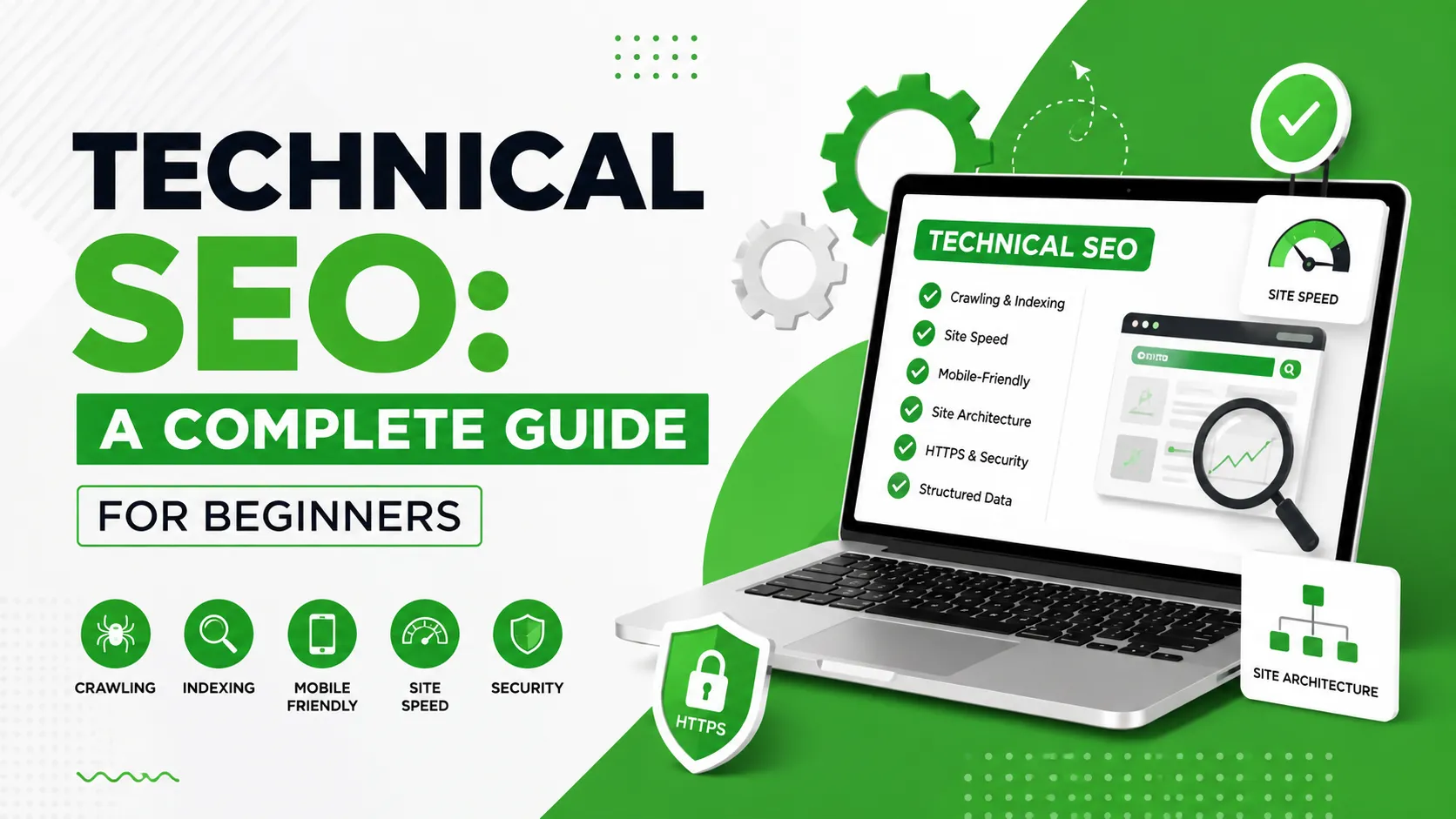
AI optimization does not eliminate the need for technical SEO. Your website should remain crawlable, indexable, mobile-friendly, secure, and logically structured.
Keep Information Accurate
Outdated or unsupported claims can reduce the usefulness of your content. Review important information regularly and update pages when circumstances change.
Common GEO Mistakes to Avoid
GEO is still an evolving area, so businesses should be careful about exaggerated promises.
Avoid strategies such as:
- Keyword stuffing
- Creating hundreds of low-quality AI-generated pages
- Publishing content without fact-checking
- Making unsupported claims about AI rankings
- Creating fake reviews or mentions
- Buying irrelevant backlinks
- Trying to manipulate AI systems with hidden text
- Treating GEO as completely separate from SEO
Google’s guidance emphasizes valuable, unique content and reiterates that established SEO practices remain foundational for AI search experiences.
GEO, SEO and Business Growth
GEO should be viewed as part of a broader digital visibility strategy. A strong approach can look like this:
Technical foundation → Search intent → Helpful content → Internal linking → Topical authority → Brand/entity clarity → External authority → Measurement
Each component supports the others. Your website needs to be useful to people first. When your content is clear, trustworthy, relevant and well organized, it becomes easier for both users and search systems to understand what your business offers.
Final Thoughts
Generative Engine Optimization is becoming an important consideration as people increasingly use AI-powered search experiences to discover information and businesses. But GEO is not a shortcut to guaranteed visibility. The most sustainable approach is to build a website that clearly communicates your expertise, provides original and useful information, answers real questions, maintains a strong technical foundation, and develops genuine authority over time. Google’s own guidance for AI search emphasizes valuable, unique content and confirms that traditional SEO remains an important foundation. For businesses, the opportunity is simple: Don’t optimize only for where people search today. Build a strong digital presence that can be understood wherever your customers look for answers. That is where GEO can become a valuable part of a modern SEO strategy.