When you search for something on Google, you may see millions of results within a fraction of a second. But how does Google decide which pages should appear first? The answer is more complex than simply choosing the website with the most keywords or backlinks.
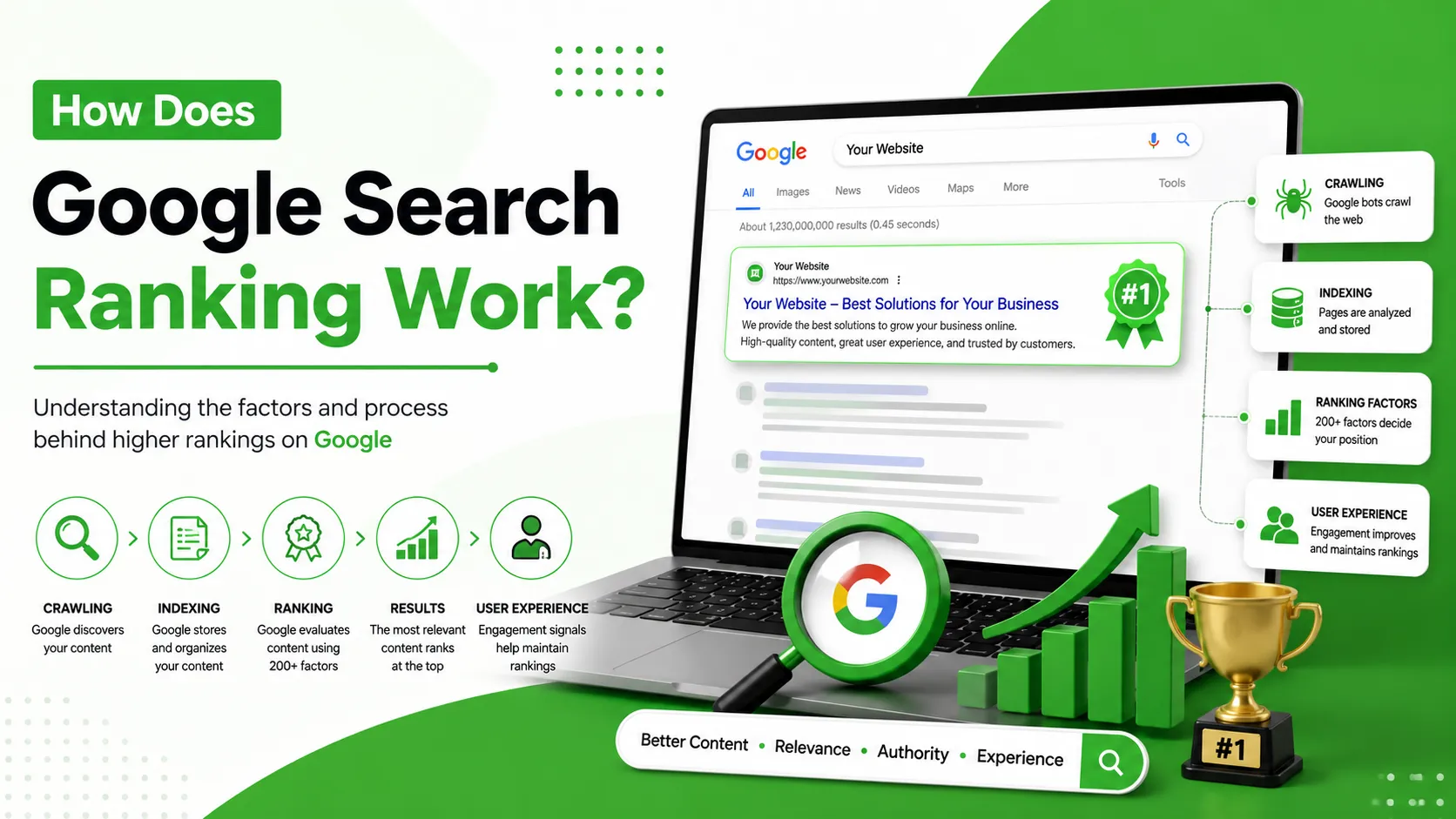
Google uses automated systems to discover web pages, understand their content, match them with search queries, and determine which results are most relevant and useful for a particular search. Google describes this process through three broad stages: crawling, indexing, and serving search results.
For business owners, understanding this process can make SEO much easier to understand. Instead of chasing individual ranking tricks, you can focus on building a website that is technically accessible, genuinely useful, relevant to your audience, and trustworthy. In this guide, we’ll explain how Google Search ranking works and what businesses can do to improve their chances of appearing in organic search results.
How Does Google Search Work?
Google Search can be understood through three main stages:
- Crawling
- Indexing
- Serving search results
These stages happen automatically across a huge number of websites and pages.
Google does not manually review every webpage before ranking it. Its automated crawlers discover pages across the web, process their content, and store information in Google’s index. When someone performs a search, Google’s systems use information from that index to determine which results are appropriate for the query.
However, being discovered or indexed does not guarantee that a page will rank highly.
1. Crawling: How Google Discovers Your Website
Crawling is the process through which Google’s crawlers discover and access webpages. Google uses automated software called Googlebot to explore the web. It can discover pages through links from other pages and through submitted sitemaps.
For example, imagine you publish a new blog article. If another page on your website links to it, Google may discover that URL while crawling the existing page. A sitemap can also provide Google with a list of URLs that you consider important.
Technical problems can interfere with crawling. Common issues include:
- Incorrect robots.txt rules
- Server errors
- Broken links
- Poor website architecture
- Inaccessible pages
- Incorrect redirects
This is why technical SEO is an important foundation for organic search.
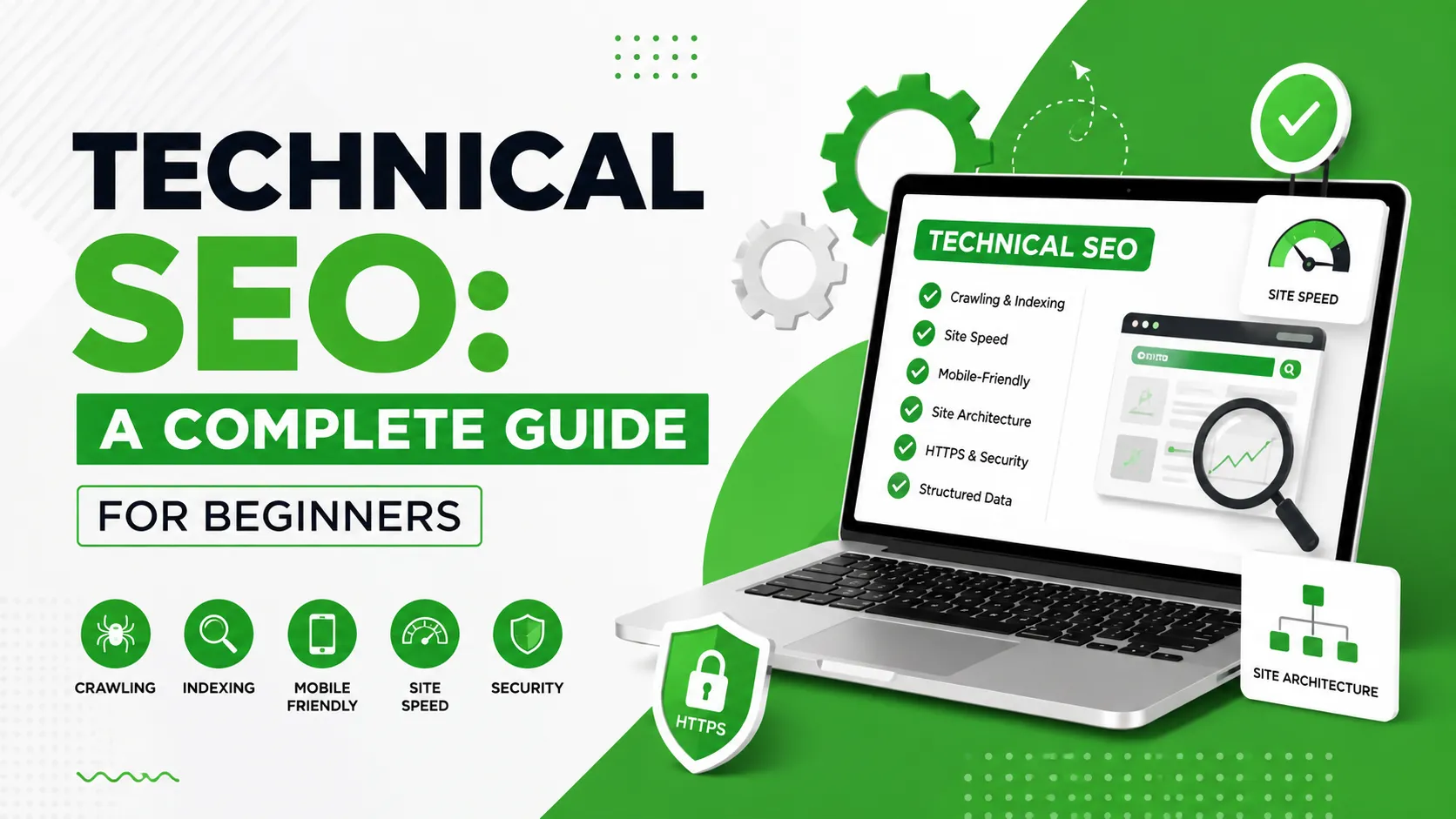
For a deeper explanation, Read Technical SEO: A Complete Guide for Beginners.
2. Indexing: How Google Understands Your Content
After discovering a page, Google analyzes its content and other information to understand what the page is about. This process is called indexing. Google can analyze elements such as:
- Text
- Images
- Videos
- Page titles
- Metadata
- Links
- Other page information
Google may also identify duplicate or substantially similar pages and determine which version should be treated as the canonical page. Not every page Google discovers will necessarily be indexed. A page may have indexing problems because of technical directives, accessibility issues, duplication, or other quality and content-related factors. This is why simply publishing a page isn’t enough.
You need to make sure the page can be accessed, understood, and appropriately presented to search engines.
3. Ranking and Serving Search Results
When you enter a search query, Google’s systems search its index for pages that may answer your question. Google then uses many signals and automated ranking systems to determine which results are most relevant and useful. Google states that its ranking systems use many factors and signals across hundreds of billions of webpages and other content in its index. This means there is no single “Google ranking factor” that determines where every page appears. Instead, different systems evaluate different aspects of content and websites.
What Factors Affect Google Rankings?
Although Google does not provide a simple formula for ranking webpages, several important areas should be considered when building an SEO strategy.
Relevance to the Search Query
Google needs to understand whether your page actually addresses what someone searched for.
For example, someone searching:
“What is Local SEO?”
needs educational information.
Someone searching:
“Local SEO expert in Bangladesh”
may be looking for a service provider.
The pages serving these searches should therefore have different purposes.
Understanding search intent is one of the foundations of good SEO.
You can learn more about the broader SEO process in What Is SEO?.
Helpful and Relevant Content
A page should provide genuine value to the person reading it.
Instead of writing content simply to insert keywords, answer the questions your audience actually has.
Useful content should be:
- Clear
- Accurate
- Relevant
- Well organized
- Easy to understand
- Written for the intended audience
For topics involving important decisions, accuracy and trust are especially important. Google’s guidance encourages people-first content and asks creators to consider whether their content demonstrates appropriate expertise and provides substantial value.
Website Quality and Technical Health
A website should provide a solid technical foundation. Important areas include:
- Mobile usability
- Page performance
- HTTPS
- Crawlability
- Indexability
- Internal linking
- Site architecture
- Redirects
- Canonicalization
- Structured data where appropriate
Technical SEO doesn’t guarantee a top ranking, but serious technical problems can prevent search engines from properly accessing or understanding your pages.
The Role of Links in Google Rankings
Links remain an important part of how search engines understand relationships between webpages. Google’s ranking documentation notes that its systems include link analysis systems, including PageRank. There are two major types of links to understand.
Internal Links
Internal links connect pages on your own website. For example, your article about On-Page SEO vs Off-Page SEO can help readers understand how different SEO activities work together. Internal links can also help search engines discover related pages and understand your website’s structure.
External Links
External links point from another website to your website. Relevant, natural references can contribute to your site’s broader authority. However, SEO should never be reduced to collecting as many backlinks as possible. Relevance, context, and quality matter.
Does Local SEO Work Differently?
Local searches can produce different results from general searches because location can influence what Google considers relevant. For example, someone searching for an SEO service in Bangladesh may receive different results from someone searching for the same service in another country. Google explains that factors such as the user’s location, language, and device can influence which results are served. For businesses serving specific geographic areas, Local SEO can therefore be an important part of the overall strategy. Read What Is Local SEO? to learn more about local search optimization.
What About eCommerce Websites?
Google ranking principles also apply to eCommerce websites, but online stores have additional challenges.
An eCommerce website may contain:
- Product pages
- Category pages
- Brand pages
- Filters
- Product variations
- Buying guides
- Blog content
The website needs a structure that allows search engines and customers to understand the relationship between these pages. Your existing guide What Is eCommerce SEO? explains the fundamentals of optimizing online stores for organic search.
Why Rankings Can Change
Google rankings are not permanent. Your position can change because:
- Competitors publish better content
- Search intent changes
- Your website changes
- Google improves its ranking systems
- New pages enter the search results
- Search behavior changes
- Your content becomes outdated
Google continuously improves its ranking systems through testing and evaluation. For this reason, SEO should be treated as an ongoing process rather than a one-time task.
How to Improve Your Google Search Visibility
If you want to improve your website’s organic visibility, start with the basics.
1. Understand your audience
Identify what your customers search for and why.
2. Create useful pages
Build service, product, and informational pages that genuinely answer user needs.
3. Improve Technical SEO
Make sure Google can crawl and understand your website.
4. Strengthen Internal linking
Connect related pages logically.
5. Optimize for search intent
Make sure each page matches the purpose behind the search.
6. Build genuine authority
Earn relevant mentions, relationships, reviews, and links rather than relying on manipulative shortcuts.
7. Monitor performance
Use tools such as Google Search Console and website analytics to understand impressions, clicks, traffic, and conversions.
Final Thoughts
Google Search ranking is not controlled by one simple formula. Google first needs to discover your website, understand and index its pages, and then determine which content is most relevant and useful for a particular search. Its automated ranking systems evaluate many signals, and the importance of those signals can vary depending on the query and context. For businesses, the best approach is not to chase every algorithm update or search-engine shortcut.
Instead, build a technically healthy website, publish useful content, understand search intent, create a logical internal-link structure, maintain a strong user experience, and build genuine authority over time. If you’re searching for the Best SEO Expert in Bangladesh, look for someone who can explain SEO clearly and build a strategy around your actual business rather than promising guaranteed rankings.